Hey there! I’m a supplier of plate heat exchangers, and today I wanna chat about something super important in the world of these nifty devices: the logarithmic mean temperature difference, or LMTD for short. Plate Heat Exchangers

So, first off, what the heck is a plate heat exchanger? Well, it’s a piece of equipment that’s used to transfer heat between two fluids. You’ve got these thin metal plates stacked together, and the fluids flow through alternate channels between the plates. This setup allows for a really efficient exchange of heat because it maximizes the surface area where the heat transfer can take place.
Now, onto the star of the show – the logarithmic mean temperature difference. When we’re talking about heat transfer in a plate heat exchanger, we’re interested in the temperature difference between the hot and cold fluids as they flow through the exchanger. But it’s not as simple as just taking the average of the temperature differences at the inlet and outlet. That’s where the LMTD comes in.
Let’s break it down with a real – world example. Imagine you’ve got a hot fluid entering the heat exchanger at, say, 100 degrees Celsius and leaving at 60 degrees Celsius. On the other hand, the cold fluid enters at 20 degrees Celsius and leaves at 50 degrees Celsius. What we notice is that the temperature difference between the hot and cold fluids is constantly changing as they flow through the exchanger.
At the inlet, the temperature difference is 100 – 20 = 80 degrees Celsius. But at the outlet, it’s 60 – 50 = 10 degrees Celsius. If we just took the arithmetic mean of these two values (80 + 10) / 2 = 45 degrees Celsius, it wouldn’t accurately represent the overall driving force for heat transfer. That’s because the heat transfer rate is proportional to the temperature difference at each point along the flow path.
The logarithmic mean temperature difference takes into account this non – linear change in temperature difference. The formula for calculating the LMTD is:
LMTD = (ΔT₁ – ΔT₂) / ln(ΔT₁ / ΔT₂)
Where ΔT₁ is the temperature difference at one end of the exchanger (usually the inlet) and ΔT₂ is the temperature difference at the other end (usually the outlet).
In our example above, ΔT₁ = 80 degrees Celsius and ΔT₂ = 10 degrees Celsius. So, LMTD = (80 – 10) / ln(80 / 10) = 70 / ln(8) ≈ 32.7 degrees Celsius.
Why is this important? Well, the LMTD is a key factor in determining the size and performance of a plate heat exchanger. The heat transfer rate (Q) in a heat exchanger is given by the equation:
Q = U × A × LMTD
Where U is the overall heat transfer coefficient, and A is the heat transfer area. The overall heat transfer coefficient depends on things like the properties of the fluids, the material of the plates, and the flow patterns. The heat transfer area is related to the number and size of the plates in the exchanger.
If we know the required heat transfer rate (Q) and the overall heat transfer coefficient (U), we can use the LMTD to calculate the necessary heat transfer area (A). This helps us design a heat exchanger that can meet the specific heat transfer needs of a particular application.
For instance, in a chemical plant, you might need to cool down a hot chemical stream using a cold water stream. By calculating the LMTD, we can figure out how many plates we need in the heat exchanger to achieve the desired cooling. If the LMTD is high, we can get away with a smaller heat transfer area because the driving force for heat transfer is large. But if the LMTD is low, we’ll need a larger heat transfer area to transfer the same amount of heat.
Another aspect to consider is the flow arrangement in the plate heat exchanger. There are different flow arrangements like parallel flow and counter – flow. In a parallel – flow heat exchanger, the hot and cold fluids flow in the same direction. In a counter – flow heat exchanger, they flow in opposite directions.
The counter – flow arrangement generally gives a higher LMTD compared to the parallel – flow arrangement for the same inlet and outlet temperatures of the fluids. This means that for a given heat transfer rate and overall heat transfer coefficient, a counter – flow heat exchanger will require a smaller heat transfer area. That’s why counter – flow plate heat exchangers are often preferred in many applications where space and cost are important considerations.
Let’s talk about some real – life scenarios where understanding the LMTD is crucial. In the food and beverage industry, plate heat exchangers are used for pasteurization. You need to heat up the product to a certain temperature for a specific time to kill off any harmful bacteria, and then cool it down quickly. By accurately calculating the LMTD, we can design a heat exchanger that can efficiently heat and cool the product, ensuring food safety and quality.
In the HVAC (heating, ventilation, and air – conditioning) systems, plate heat exchangers are used for heat recovery. For example, in a large building, the warm exhaust air can be used to pre – heat the incoming fresh air. The LMTD calculation helps in sizing the heat exchanger so that it can effectively transfer the heat from the exhaust air to the fresh air, reducing energy consumption and costs.
As a plate heat exchanger supplier, I know how important it is to get these calculations right. We work closely with our customers to understand their specific heat transfer requirements. Whether it’s a small – scale industrial application or a large – scale commercial project, we use the latest software and engineering techniques to calculate the LMTD accurately and design the most suitable heat exchanger for their needs.
We also offer a wide range of plate heat exchangers with different plate materials, sizes, and flow arrangements. Our plates are made from high – quality materials like stainless steel, titanium, and nickel alloys to ensure durability and resistance to corrosion. And we can customize the heat exchangers to fit the exact specifications of our customers.
If you’re in the market for a plate heat exchanger, whether you’re a chemical engineer looking for a solution for your plant, a food processor needing a pasteurization system, or an HVAC contractor working on a building project, I’d love to have a chat with you. Understanding the logarithmic mean temperature difference is just the first step in getting the right heat exchanger for your application. We can work together to analyze your heat transfer requirements, calculate the LMTD, and come up with a cost – effective and efficient solution.
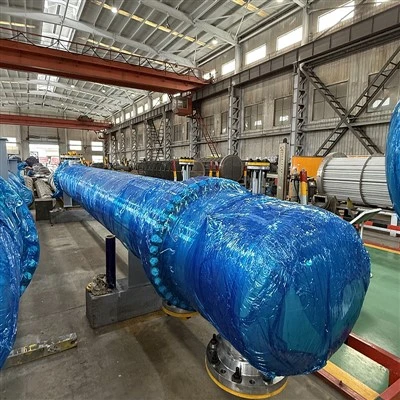
Don’t hesitate to reach out to us to start the conversation about your plate heat exchanger needs. We’re here to help you make the best choice and ensure that your heat transfer process runs smoothly.
U-Tube Heat Exchangers References
- Incropera, F. P., & DeWitt, D. P. (2002). Fundamentals of Heat and Mass Transfer. John Wiley & Sons.
- Shah, R. K., & Sekulic, D. P. (2003). Fundamentals of Heat Exchanger Design. John Wiley & Sons.
Shandong Meiling International Trading Co., Ltd.
We are one of the most professional plate heat exchangers manufacturers and suppliers in China, featured by quality products and good service. Please feel free to wholesale advanced plate heat exchangers made in China here from our factory. Customized orders are welcome.
Address: No. 998 Niushan Road, Linzi District, Zibo City, Shandong Province
E-mail: dingxiaoli@sdmeiling.com.cn
WebSite: https://www.ml-heatexchanger.com/
