If you’ve ever worked with copper—whether you’re a metalsmith, an electrician, a manufacturer of decorative fixtures, or someone just tinkering around a workshop—you’ve probably had a friend or coworker tease you by holding a magnet up to your copper plate and asking, “Wait, is this actually copper?” I get it. For years, I’ve heard this question time and again from customers stopping by my warehouse, or messaging me late at night because they’re mid-project and confused why their shiny new copper sheet won’t stick to their magnetic workbench. As a copper plate supplier, I don’t just sell metal; I spend hours every week explaining the quirks and properties that make copper one of the most versatile materials in the world, and the magnetic question is one that comes up more than any other. Let’s break this down, no confusing jargon, just the real science behind whether copper is magnetic, and why it matters for the work you’re doing. Copper Plate

First, let’s start with the basics: what makes a material magnetic? Most people learn in high school science that magnetism comes from the movement of electrons in an atom, specifically the spin of those negatively charged particles. Each atom has electrons that spin around its nucleus, and in some elements, these spins align in the same direction, creating a tiny magnetic field. When a large enough number of these aligned atoms cluster together, the material becomes ferromagnetic—this is the type of magnetism you see in iron, nickel, and cobalt, the metals that stick to fridge magnets and workshop magnets. Ferromagnetic metals have unpaired electrons that spin in the same direction, creating that strong, permanent pull we all know.
Copper? It’s not in that group. Let’s look at copper’s atomic structure to confirm. Copper has an atomic number of 29, meaning it has 29 electrons orbiting its nucleus. Those electrons fill energy levels in pairs, right? Each pair has one electron spinning up and one spinning down, which cancels out their magnetic fields. Copper’s outermost electrons do have one unpaired electron, but that single electron doesn’t align with other copper atoms’ electrons. Instead, it moves freely through the metal, which is why copper is such a great conductor of electricity and heat. Because there’s no large-scale alignment of atomic magnetic fields, pure copper is not ferromagnetic. Hold a strong fridge magnet up to a solid copper plate, and nothing will happen. The magnet won’t stick. It’s that simple—pure copper is non-magnetic.
Wait, but if that’s the case, why do I ever see videos online of copper repelling magnets, or having some kind of magnetic effect? Oh, that’s a different thing, and it trips a lot of people up. That’s called diamagnetism, and it’s a property of all materials, not just copper. Every material shows some level of diamagnetism, but in most metals like iron or nickel, that weak effect is completely overpowered by their strong ferromagnetism, so you never notice it. Diamagnetism happens when you put a material in a strong external magnetic field. The magnetic field pushes on the electrons in the material, making them move, which creates a tiny, temporary magnetic field that opposes the external field. For most materials, this effect is so small you can’t feel it, but for copper, it’s noticeable enough to create what’s called Lenz’s force— that weird “slow-motion” slide of a strong magnet down a copper pipe, or the way two magnets seem to hover above a thick copper sheet. It’s not the same as being magnetic, though. The copper isn’t acting like a magnet; it’s just temporarily resisting the magnetic field around it. If you take that same copper plate and hold it next to a piece of iron, the iron will stick, and the copper will just sit there, unaffected. That’s an important distinction I have to make with every customer who asks about the repelling effect— it’s not magnetism, it’s a quirk of copper’s interaction with magnetic fields, and it only happens with very strong magnets, not the regular ones you have in your toolbox.
Now, let’s tie this back to why this matters for someone buying copper plates, because that’s the part that affects your project, your budget, and your end product. I’ve had customers come to me convinced that if their copper plate is magnetic, it’s not real copper. That’s a common mistake, and it’s one that can lead to buying the wrong material, or even overpaying for something that isn’t what they need. For example, if you’re making a decorative copper sign, you don’t want a magnetic material like iron that will rust or look different after a few years. But if you’re working on an electrical project—say, bus bars, wiring components, or parts for a power system—you’re going for that non-magnetic property of copper, because if your copper part is magnetic, that’s a sign it’s not pure copper. Wait, right—all this talk about pure copper, so what about copper alloys? That’s another big question I get all the time. Brasso, bronze, copper-nickel alloys, even the common “copper” used for plumbing sometimes—these are not pure copper, they’re mixed with other metals. If an alloy has iron, nickel, or cobalt in it, that can make the whole material magnetic. For example, some types of bronze are mixed with tin, which is non-magnetic, but others add iron, making them slightly magnetic. Brass, too, is usually copper and zinc, both non-magnetic, but some cheap brass alloys have small amounts of iron, so they will stick to a magnet if you test them.
This is why testing a copper plate with a magnet isn’t always a 100% way to tell if it’s pure copper, but it’s a quick, easy test that works most of the time. If a copper plate sticks strongly to a magnet, it’s almost certainly not pure copper— it’s an alloy with magnetic metals, or it’s even a different metal coated to look like copper (that’s a trick some less scrupulous suppliers use, so always test that “copper” sheet before you buy). If the copper plate does nothing when you hold a magnet up to it, that’s a good sign it’s pure or near-pure copper, which is what most people need for their projects.
Let me give you a few examples from my own customers to make this real. Last month, I had a customer who restores old antique cars. He needed thin copper plates for the interior trim panels of a 1960s station wagon. He told me he’d bought some copper plate from another supplier online, and when he tested it, it stuck to his magnet, so he sent it back because he knew pure copper shouldn’t be magnetic. That’s exactly the kind of mistake I’m talking about— that supplier was selling a copper-iron alloy, which would have rusted within a year, ruined his restoration, and cost him thousands. He came to me, and we sent over 16-gauge pure copper sheets, non-magnetic, exactly what he needed, and he’s placed three more orders since then. Another customer is a manufacturer of induction cookware. Wait, induction cooktops work by creating a magnetic field that heats up the pan, right? So their cookware can’t be pure copper, because pure copper is non-magnetic. That’s why induction pans are made of a steel core with a copper cladding on the outside—they have that magnetic steel layer to work with induction, and the copper on the inside for even heating. That’s a perfect example of when you want a different property than pure copper gives you, and why understanding whether copper is magnetic is critical to choosing the right material.
I’ve also had customers in the art world. Metalsmiths make copper jewelry, sculptures, custom fountains, all kinds of things. They love copper because it ages into that beautiful patina, it’s soft enough to work with, and it’s non-toxic for many applications. When a metalsmith is forging a copper ring, or hammering a custom design into a copper plate, a magnetic material wouldn’t work the same way— pure copper’s malleability is unique, and it’s because of its atomic structure, not because it has magnetic properties. I always tell art customers that if their copper is magnetic, they’re either working with an alloy that will patina differently than pure copper, or something else entirely.
Now, let’s talk about a common myth I hear all the time: “If copper is non-magnetic, why do electrical wires use copper and not iron?” Wait, that’s a good question, and it ties back to conductivity. Iron is magnetic, but it’s also a terrible conductor of electricity, and it rusts. Copper has the best electrical conductivity of any non-precious metal, and it’s non-magnetic, which makes it perfect for wiring, bus bars, transformers, all sorts of electrical components. If iron was a good conductor, we might use it, but it’s not, and its magnetic properties would actually cause more problems in electrical systems—they create resistance, heat up, and reduce efficiency. That’s another way copper’s non-magnetic property is a benefit, not a drawback, for certain applications.
As a copper plate supplier, this is the stuff I live and breathe every day. I don’t just stack metal in my warehouse and ship it out— I answer questions, I explain the differences between pure copper and alloys, I help customers pick the right thickness, grade, and finish for their specific project. The question “Are copper plates magnetic?” seems simple, but it opens up a whole conversation about material properties, application needs, and how to avoid costly mistakes. I’ve seen too many people waste money on the wrong copper plate because they relied on the magnet test without understanding the difference between diamagnetism and actual ferromagnetism, or because they bought from a supplier that cuts corners and sells alloys labeled as pure copper.
So, if you’re working on a project—whether it’s building a custom kitchen backsplash, restoring a historic building’s copper gutters, making electrical components, crafting metal art, or anything else that requires copper—here’s what you need to remember: Pure copper plates are not magnetic, they will not stick to a standard magnet. Any magnetic copper is an alloy mixed with iron, nickel, or other magnetic metals. The faint repulsion you see when you hold a very strong magnet near thick copper is diamagnetism, not magnetism, and it doesn’t mean your copper is “good” or “bad” for your project. If you need reliable, pure copper plates for your work, test a sample with a regular fridge magnet first—if it sticks, it’s not pure copper, and it’s probably not what you want.
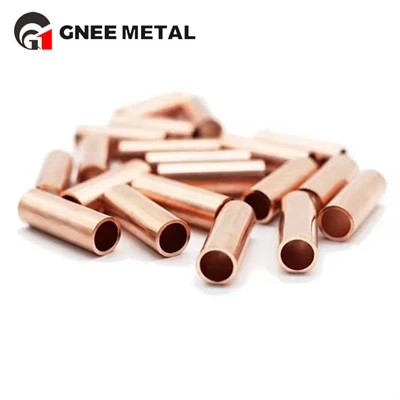
At the end of the day, copper is one of the most useful materials on the planet, and its non-magnetic property is just one of the many characteristics that make it stand out. If you’re looking for high-quality, true copper plates for your next project, whether you need thin gauge for metal art, thick plate for industrial applications, custom cut sizes, or any other specification, I’m here to help. We carry a range of pure copper plates in various grades and thicknesses, all tested to ensure they’re non-magnetic and meet your project’s needs. Don’t waste time or money on subpar material—reach out to me to discuss your requirements and get the right copper for the job.
Copper Pipe References:
- Callister, W. D., & Rethwisch, D. G. (2018). Materials Science and Engineering: An Introduction. John Wiley & Sons.
- Nave, C. R. (n.d.). Diamagnetism. HyperPhysics, Georgia State University.
- ASM International. (2001). Copper and Copper Alloys: Properties and Preparation for Welding. ASM Handbook.
- Lienhard, J. H., & Lienhard, J. H. (2003). A Heat Transfer Textbook. Phlogiston Press.
- The Copper Development Association. (2020). Copper Properties and Applications. CDA Publication No. 102.
Gnee Steel (Tianjin) Co., Ltd.
Gnee Steel (Tianjin) Co., Ltd. is one of the leading copper plate manufacturers and suppliers in China. We warmly welcome you to buy discount copper plate for sale here from our factory. All our products are with high quality and competitive price. Contact us for more cheap products.
Address: No.4-1114, Beichen Building, Beicang Town, Beichen District, Tianjin, China
E-mail: sales@gneemetal.com
WebSite: https://www.chinacopperalloys.com/
