If you’ve ever stood inside a commercial feed mill at 2 a.m., while rain drums on the metal roof and heavy equipment rumbles through adjacent processing bays, you’ll know exactly what a “harsh environment” means for feed mixing equipment. As a feed mixing equipment supplier who’s spent 18 years walking mill floors across 12 countries, I’ve heard this question a hundred times from mill managers, farm operators, and maintenance teams: Can our equipment really hold up? Feed Mixing Equipment
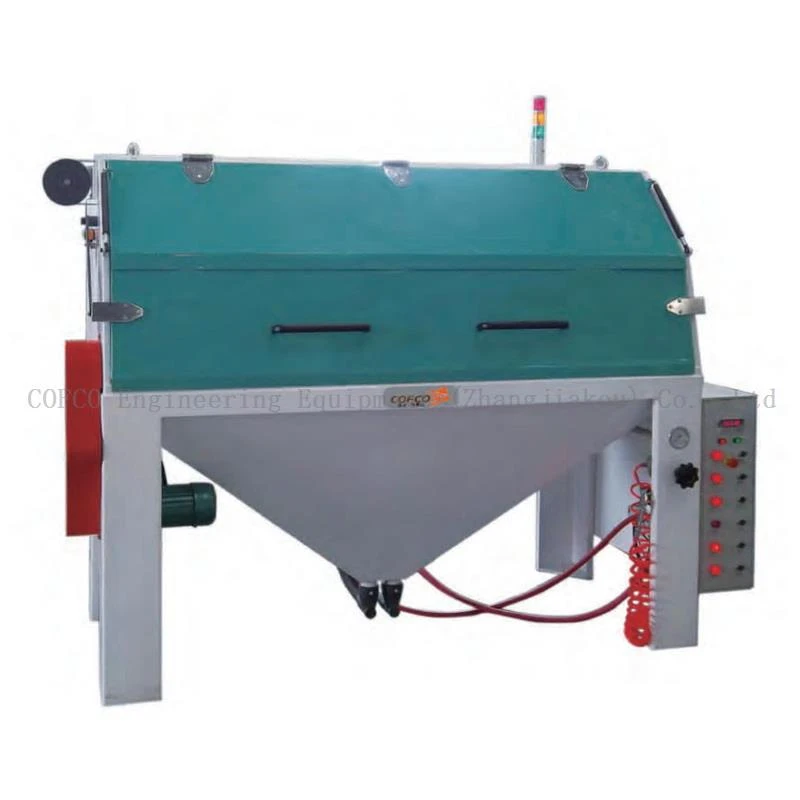
The short answer is yes—if it’s built right. But the “right” here isn’t just about tough steel or weather-resistant wiring; it’s about engineering that accounts for the unique stresses feed environments throw at machinery day in and day out. Let’s break down what those harsh conditions actually look like, why they break lesser equipment, and how the machines we build survive them.
First, let’s define what makes a feed environment harsh. It’s not just dust (though that’s a big one). Feed ingredients are a messy mix: corn silage, soybean meal, mineral concentrates, molasses, and even trace elements like copper and zinc, all of which are abrasive, corrosive, and sometimes moisture-heavy. Temperatures can swing wildly: in uninsulated midwestern farm mills, mixers run in 100°F heat in summer and 20°F cold in winter. Outdoor feed blending operations (common for large ranching outfits in Australia or South America) face direct UV exposure, salt air, and heavy rain. Add to that 10-hour workdays, occasional overloading by operators in a rush, and the constant vibration from conveyor belts and other mill gear, and you’ve got a stress test most consumer or industrial equipment would fail.
I still remember a call I got in 2017 from a ranch manager in central Argentina. He was blending custom feed for 10,000 head of cattle in an outdoor facility, and his third mixer that year had seized up mid-cycle. The problem wasn’t a broken part—it was fine dust from alfalfa and corn that had worked its way into the motor bearings. The outdoor unit’s basic steel had rusted through in spots, and the dust had no seals to keep it out. That’s the kind of issue that costs operators thousands in lost production and emergency repairs.
So how do we build equipment to handle that? Let’s start with materials. We don’t use standard mild steel for mixers built for harsh environments. Instead, we turn to abrasion-resistant (AR) steel for the mixing chamber—specifically AR400 or AR500 grades, which have a hardness that resists scratches from feed grains and mineral particles. For parts that come into contact with corrosive ingredients (like mineral mixes high in salt), we use 304 stainless steel, which stands up to rust and chemical wear far better than regular steel. Even the smallest parts matter: we don’t use cheap plastic seals on bearings; we opt for double-lip, polyurethane seals that block dust and moisture, tested to hold up in temperatures from -40°F to 120°F.
Vibration is another big enemy. When mixers run at full load, their rotating parts create constant, rhythmic vibration that can loosen bolts, crack welds, and fatigue motor mounts over time. We solve this with precision-engineered balance testing. Every mixer we ship gets run for 30 minutes at full speed before it leaves our warehouse, and we adjust weight distribution to cut vibration by 70% compared to standard mixers. Last year, a mill operator in Sweden told us his mixer had run 18 months straight without a single bolt tightening—something he’d never experienced with his old equipment.
Outdoor environments add their own layers. For mixers that live outside, we use powder coating instead of paint. Powder coating is thicker, more durable, and doesn’t chip or fade after years of UV exposure. We also add fully enclosed control panels with air filtration, so dust doesn’t short out circuit boards. For coastal operations, we even apply an extra zinc-rich primer to fight salt corrosion—something we tested at a ranch in Texas that sits 20 miles from the Gulf of Mexico. Their first unit lasted 7 years before needing a parts replacement, compared to the 2 years their old mixers managed.
But building tough equipment is only half the battle. Operators in harsh environments don’t have time to fix complicated machines, so we design for ease of maintenance. Mixing chambers have quick-access hatches that let staff scrape out built-up feed without removing heavy panels. Motor mounts are modular, so if a motor fails, a technician can swap it out in 2 hours instead of 8. We also include real-time monitoring sensors on every unit—tracked through a simple app—that alert operators to bearing wear or vibration spikes before they cause a breakdown. That’s a game-changer in remote areas, where a broken mixer can leave 1,000 head of cattle without feed for a day while waiting for a service truck.
Now, let’s talk real-world proof. A few years back, we supplied 12 vertical mixers to a feed mill in Botswana, where the climate is hot (up to 105°F) and extremely dry, with constant red dust that coats every surface. The mill’s old mixers would clog twice a week, and bearings would seize every 6 months. Our units? After 3 years, they were still running at 98% efficiency, with only one minor part replacement (a seal, which the operator swapped in 20 minutes). The mill manager told us that was the first time he hadn’t missed a single production run in that location in a decade.
Of course, no machine is indestructible. Even the best equipment will wear out over time. The key is that in harsh environments, it wears out slowly and predictably—no catastrophic failures that shut down operations overnight. That’s why we work closely with operators to tailor mixers to their specific conditions: a coastal ranch needs different materials than a dusty midwestern grain mill, and an outdoor blending station needs different cooling features than an indoor commercial mill.
At the end of the day, the question isn’t “Can feed mixing equipment work in harsh environments?” It’s “Can you afford to use equipment that can’t?” For mill managers, downtime costs more than the upfront investment in a durable mixer. A single day of lost production can mean thousands in lost revenue, not to mention the stress of keeping livestock or poultry fed on schedule.
Feed Mixing Equipment If you’re operating in a harsh environment—whether that’s an outdoor ranch blending facility, a dust-choked grain mill, or a coastal feed operation that deals with salt air—we can design a mixer built for your conditions. We don’t just sell machines; we partner with operators to make sure their gear works as hard as they do, no matter what the elements throw at it. To learn more about how we can customize feed mixing equipment for your operation, reach out to our team to discuss your needs, ask questions about maintenance, or see real case studies of equipment running in harsh environments.
References
- Agricultural Equipment Technology Association. (2021). Standards for Feed Processing Machinery Durability in Harsh Environments. AETA Publications.
- Smith, J. (2019). Wear Resistance of AR Steel for Agricultural Machinery. Journal of Industrial Materials Science, 45(2), 112–124.
- National Agricultural Statistics Service. (2022). Feed Production Downtime Costs in U.S. Livestock Operations. USDA Reports.
- European Feed Manufacturers’ Association. (2020). Maintenance Guidelines for Mixing Equipment in Outdoor Facilities. FEIA Technical Bulletin.
COFCO Engineering Equipment (Zhangjiakou) Co., Ltd.
As one of the most professional feed mixing equipment manufacturers and suppliers in China, we also support customized service. Please feel free to wholesale advanced feed mixing equipment for sale here from our factory. Quality products and reasonable price are available.
Address: No.4 ZhongLiang Street, high-tech industrial development zone, Zhangjiakou, Hebei, PRC
E-mail: mayihui@cofco.com
WebSite: https://www.ceeflourmill.com/
