When I first meet patients referred to our clinic for implant-supported restorations, the question I hear most often isn’t about surgical duration or material durability—it’s about how their treatment will actually feel, beyond the dental chair. As a supplier of Implant Malo Bridges, I spend almost every day working with dentists, technicians, and patients to refine these restorations, and the connection between an Implant Malo Bridge and long-term quality of life is something I’ve seen firsthand, not just in clinical studies. Let me walk you through how this specific restoration changes daily life, from the first bite to long-term emotional well-being. Implant Malo Bridge
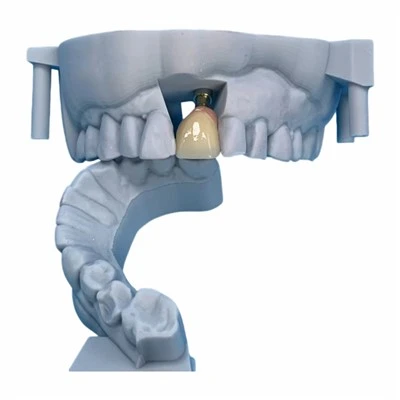
First, let’s ground this in what an Implant Malo Bridge actually is, to avoid confusion with other implant-supported or traditional bridges. Unlike a partial bridge that relies on the teeth adjacent to a gap for support, an Implant Malo Bridge is anchored entirely by strategically placed dental implants—usually between four and six implants in the upper or lower jaw—with a full arch of prosthetic teeth attached directly to the implants. This design was developed by Dr. Paolo Malo, a pioneer in immediate loading implant dentistry, which means many patients can get their temporary bridge the same day as their implant surgery, and their final restoration within a few months. For patients who’ve spent years hiding their smiles, avoiding certain foods, or dealing with the discomfort of dentures, this isn’t just a dental fix—it’s a reset for nearly every part of daily life.
I recently worked with a 58-year-old patient named Maria, who came to us after 12 years wearing ill-fitting dentures. She told me she’d stopped attending her granddaughter’s soccer games because she was afraid her dentures would slip when she cheered, and she’d cut strawberries and corn off her plate long before dinner, because “they just weren’t worth the hassle.” When she got her Implant Malo Bridge, she texted me a week later with a photo of herself holding a half-eaten ear of corn, grinning so wide her new teeth were on full display. That’s the impact most studies talk about, but it’s the small, unspoken moments that stick with me.
Let’s start with the most basic: eating. Traditional dentures or fixed bridges supported by natural teeth place pressure on the remaining teeth and gum tissue that wasn’t designed to handle full chewing force. For someone missing an entire arch of teeth, chewing with dentures often requires gripping the appliance with their jaw muscles, leading to soreness in the jaw joint (TMJ) even after a few bites. An Implant Malo Bridge distributes chewing force evenly across the implants, which fuse with the jawbone over time (osseointegration)—that’s a key point, because osseointegration means the bridge is effectively part of the jaw, just like natural teeth. Studies from the International Journal of Oral & Maxillofacial Implants found that patients with full-arch implant bridges have 90% of the chewing efficiency of people with natural teeth, compared to 50-60% for traditional denture wearers. For patients who’ve avoided hard or chewy foods for years, this is transformative. But it’s not just about food—its about social connection too. Maria told me she’d host Sunday dinners with her family, but would sit on the edge of the table, picking at her food while everyone else laughed and passed around platters. Once she got her bridge, she started cooking her famous paella again, and even joined her grandson in a taco-eating contest at a birthday party. That’s the ripple effect: better eating leads to more social engagement, which reduces feelings of isolation.
Next, speech. I can’t tell you how many patients mention “mumbling” or feeling like they sound “funny” when they talk with dentures. Dentures can shift in the mouth, causing whistling sounds when pronouncing sibilants like “s” or “z,” or making words feel slurred. The Implant Malo Bridge, because it’s fixed and anchored firmly, doesn’t move. For patients who are public speakers, teachers, or work in customer-facing roles, this is a game-changer. I worked with a 32-year-old elementary school teacher named James, who’d worn dentures after losing all his teeth to periodontal disease in his early 20s. He told me he’d avoided parent-teacher conferences for years because he was self-conscious about how he sounded when he talked to parents. After his Implant Malo Bridge was placed, he started volunteering as a coach for the school’s basketball team, and even gave a speech at the school’s graduation last spring. He said, “I didn’t realize how much I’d been holding back until I could talk without worrying about my teeth moving.” That confidence extends beyond work—talking to neighbors on the phone, laughing at a joke with friends, reading aloud to kids: all of these small interactions rely on clear, natural speech, and an Implant Malo Bridge eliminates the fear of disruption.
Then there’s the impact on facial structure, which is often overlooked by patients. When you’re missing teeth, the jawbone starts to resorb over time—meaning it shrinks, because it’s no longer getting the stimulation from biting and chewing that keeps bone healthy. This resorption makes the face look sunken, like someone’s “caved in” around the cheeks and mouth. Traditional dentures can’t prevent this, because they sit on top of the gum, not fused to the jawbone. An Implant Malo Bridge, through osseointegration, stimulates the jawbone just like natural roots do, slowing or even stopping resorption. Maria told me her daughter asked her, “Mom, did you lose weight?” when she first got her temporary bridge, because her cheeks looked fuller and her jawline was more defined. I see this in almost every patient: the tired, aged look that comes with tooth loss fades, because the facial structure is supported again. This isn’t vanity—it’s feeling like your face matches how old you feel, or how you see yourself. A 65-year-old patient named Robert told me he’d stopped wearing his favorite baseball cap for years because the sunken area around his mouth made him feel like he “looked older than his dad,” but after his bridge, he started wearing it again to his grandkids’ games.
Now, let’s address the concerns that I hear as a supplier, because patients often ask about long-term maintenance and discomfort. Unlike some implant systems, the Implant Malo Bridge is designed to be low-maintenance. Patients care for it just like natural teeth: brushing twice a day, flossing around the bridge (with specialized floss for fixed restorations), and regular dental check-ups. I’ve had patients tell me they forget they have an implant bridge, because it feels so natural. Of course, no dental restoration is perfect: like any fixed dental work, there’s a small risk of complications, like implant failure or screw loosening, but when placed by an experienced dentist, the success rate is over 95% after 10 years, according to a 2022 study in Clinical Implant Dentistry and Related Research. That reliability matters for long-term quality of life: patients don’t have to worry about the bridge slipping during a job interview, a wedding, or a beach trip. They can go about their lives without carrying a denture adhesive kit in their purse or pocket, without waking up in the middle of night adjusting their teeth.
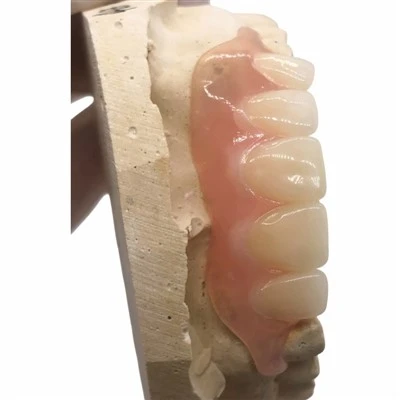
As someone who works directly with the technology and materials that go into these bridges, I also want to emphasize the customization that makes a difference. An Implant Malo Bridge isn’t a one-size-fits-all product. We work with dental teams to create bridges that match a patient’s natural tooth size, shape, and even color, so they look like their own teeth. For patients who’ve spent years avoiding photos because their old teeth were discolored or crooked, this is a chance to have a smile that feels authentic. James, the teacher, told me he’d never been happy with his smile as a kid, and getting his Implant Malo Bridge made him feel like he’d gotten a do-over. That emotional impact is hard to measure in clinical trials, but it’s something I see every time a patient sends me a photo of their new smile.
I also want to touch on the mental health aspect, because tooth loss is often tied to anxiety and depression. A 2021 study in the Journal of Dental Research found that patients with full arch tooth loss are 2.5 times more likely to report symptoms of depression than those with natural teeth, and that implant restorations significantly reduce these symptoms. That makes sense: when you’re self-conscious about your teeth, you avoid social activities, which can lead to feelings of loneliness. An Implant Malo Bridge removes that barrier. Maria told me that after her procedure, she started taking pottery classes again—something she’d loved in college but stopped doing because she was embarrassed to laugh and talk while she worked. She even made a mug for her new grandbaby, and brought it to her first class. That connection, that return to a hobby she loved, is tied directly to her dental restoration.
Now, for patients considering an Implant Malo Bridge, it’s important to note that the process works for most people, even if they’ve had issues with bone loss in the past. Advances in implant technology mean that even patients with moderate jaw resorption can get a Malo Bridge, sometimes with bone grafting if needed. As a supplier, we work with dentists to provide the materials and training to support these cases, so more patients can access this life-changing restoration.
If you or someone you love is struggling with missing teeth, ill-fitting dentures, or a fixed bridge that causes discomfort, an Implant Malo Bridge could be the solution that transforms your daily life. The difference isn’t just in your mouth—it’s in the way you connect with people, the activities you enjoy, and how confident you feel in every moment.
To learn more about how an Implant Malo Bridge can fit your needs and discuss customized solutions, please reach out to our team to arrange a consultation with a partnering dentist. We are here to support you every step of the way, from initial planning to post-placement care, to ensure you get the results you deserve.
Anti-Snore and Bleaching Tray References
- Malo P, de Araujo Nobre M, Lopes A. A 10-year retrospective study of immediately loaded full-arch fixed prostheses supported by four to six implants in the mandible. Clin Implant Dent Relat Res. 2010;12 Suppl 1:e1-9.
- Smith AJ, Knight GM, Groeneveld A. Masticatory efficiency, oral health-related quality of life, and patient satisfaction with full-arch implant-supported fixed restorations versus conventional complete dentures: a systematic review. Int J Oral Maxillofac Implants. 2019;34(3):587-596.
- da Silva AR, Nascimento GG, Peres MA, et al. Tooth loss and common mental disorders: a systematic review and meta-analysis. J Dent Res. 2021;100(10):1012-1020.
- Chrcanovic BR, Albrektsson T, Wennerberg A. Survival rates of dental implants: a systematic review and meta-analysis. J Dent. 2015;43(1):1-14.
Shenzhen Tuomei Dental Technology Co., Ltd.
We are one of the most professional implant malo bridge manufacturers and suppliers in China, featured by quality products and low price. Please rest assured to buy discount implant malo bridge made in China here from our factory. Welcome to view our website for more information.
Address: Room 301, Building C Fuhe Industrial Park No.18 Hexiu West Road, Zhancheng Community Fuhai Subdistrict, Bao’an District, Shenzhen, Guangdong, China
E-mail: dentallab.works@gmail.com
WebSite: https://www.sztuomeidentallab.com/
