Hey there, Gardner Denver Air Compressor

Let’s cut to the chase—if you’re reading this, you’re probably staring at a workspace where you’ve got a couple of Gardner Denver air compressors sitting around, and you’re wondering if you can hook ’em up to make one bigger, badder system. First off, I’m not some random blog guy— I’m part of the Gardner Denver compressor supply team, so I’ve talked this through with hundreds of shops, from small garages to big manufacturing plants, and I’ve got the real deets, not just the glossy tech sheet stuff. Let’s break this down straight, no fluff.
First, let’s get one thing clear: “connecting multiple air compressors together” is totally doable. But it’s not just plugging two machines into each other and calling it a day—there’s a right way, a wrong way, and a few things you need to nail down before you even touch a pipe wrench. Let’s start with why you’d wanna do this in the first place, because that’ll help you figure out if it’s worth it for you. Maybe you’ve outgrown your single compressor’s output, like a small auto shop that added another bay and now needs more consistent air for two lifts and a paint spray gun. Or maybe you run a fabrication shop where demand spikes—like when everyone’s finishing parts before a deadline—so one compressor can’t keep up. Or maybe you just want backup, y’know? If one unit goes down, the other kicks in, so you don’t lose half your day to downtime. Those are all solid reasons, and Gardner Denver systems are actually built with this kind of scalability in mind, which is why we sell so many folks for this exact scenario.
Now, the main ways to link ’em up—let’s keep this simple, not get into jargon that’ll make your head hurt. The two big ones are “parallel piping” and “using a master controller.” Wait, let’s unpack parallel first because that’s the basic, starting point. Parallel piping is when you run all your compressor discharge lines into one big main pipe that feeds your whole facility. But here’s the catch—you can’t just do that if you’ve got two compressors that turn on and off randomly. If one kicks on at 100 PSI and the other at 90, you’re gonna have pressure swings, which are terrible for tools, pneumatic equipment, and even the compressors themselves. That’s where the master controller comes in. This is the brains that talks to all your Gardner Denver compressors (and yeah, most newer Gardner Denver models work with our controllers, but if you have older units, we can check compatibility—no problem). The master controller does a few key things: it tells each compressor when to turn on, when to take a load off, and when to shut off, so they all work in sync. It balances the runtime too, so one compressor isn’t doing all the work while the other sits idle. That’s a big one for extending the life of all your units—wear and tear is spread out, so you don’t have to replace one machine way before the other.
Wait, let’s talk about the two types of controllers, quick. There’s standalone master controllers that work with most Gardner Denver models, and there’s even some newer compressors that have built-in master capability, so you don’t have to buy a separate box. For example, our Next Gen reciprocating compressors or rotary screw models—they play nice with each other straight outta the box if you set ’em up right. That’s why I always tell folks to check the model numbers first, not just grab any two compressors and hope they mix.
Now, the stuff most people mess up when they try this. First, pressure matching. Every air compressor has a “cut-in” and “cut-out” pressure—when it turns on and when it turns off. If your two compressors have different numbers here, they’re gonna fight each other. Like, say Compressor A cuts in at 90 PSI and cuts out at 120, and Compressor B cuts in at 95 and cuts out at 125. If you just pipe ’em together, when the pressure drops to 92, Compressor A kicks on, but Compressor B waits until 95. Now you’ve got a gap where pressure dips low enough that tools might stall, then when both kick on, you might overshoot 125, which is bad for the whole system. That’s where the master controller fixes it—it sets a single pressure setpoint, so all units sync up.
Second, pipe sizing. This is way more important than most guys think. If you’ve got two 5 HP compressors, each with a 1-inch discharge port, you can’t just use a 1-inch main pipe—you need a bigger line, like 1.5 inches, to handle the combined flow. If your pipe’s too small, you get pressure drop, which is basically wasted air. Like, if you’re pushing 110 PSI at the compressor, you might only get 95 at your tool, which makes your air tools work harder, uses more energy, and shortens their life. I’ve seen shops try to skimp here, and they end up having to re-pipe a whole system 6 months later—don’t do that. We always help our customers calculate the right pipe size for their total CFM (cubic feet per minute) output, so you don’t have that problem.
Third, tank size. Wait, receivers—yep, the big air tanks. If you’re connecting two compressors, you can either get one big common tank or keep the individual tanks, but trust me, a common receiver is way better. The tank acts as a buffer, so when demand spikes, the compressor doesn’t have to kick on mid-spike— the tank supplies the air while the compressors ramp up. If you don’t have enough tank, you’re gonna get short cycling, where compressors turn on and off every few minutes. That’s brutal on their motors and pumps—we’ve seen guys burn out a compressor in a year because they skipped adding a common tank. We usually recommend at least 1 gallon of tank per CFM of total output, so if your two compressors put out 20 CFM combined, that’s 20 gallons minimum, more if demand is super spikey.
Now, what about if you have different types of Gardner Denver compressors? Like, a rotary screw and a reciprocating? I know some shops mix and match because maybe they had a screw for steady demand and added a reciprocator for peak times. Can you do that? Yeah, but you’ve got to be extra careful with the master controller. Most controllers can handle different compressor types now, but you can’t just wing it. We’ve helped a lot of shops with mixed setups, but the key is making sure the controller recognizes each unit’s unique specs—like maximum CFM, pressure range, motor size—so it doesn’t overload anything. Pro tip: never mix a oil-lubricated and oil-free compressor without checking with us first—their operating profiles are different, and that can cause issues with air quality or system pressure.
Another thing: maintenance. When you link compressors together, maintenance isn’t just individual anymore. You’ve got to make sure all the filters, oil separators, and belts are in good shape on every unit, because if one is dirty, it can throw off the whole system. Like, if one compressor has a clogged air filter, its CFM drops, so the master controller might tell the other to work harder, which wastes energy and shortens that one’s life. We remind all our customers with parallel systems to do monthly checks on every unit, not just the main one. Also, don’t forget to drain the tanks regularly—water buildup in the lines is a universal problem, and a big system means more places for water to collect, so auto-drain valves are worth the extra cost.
Wait, let’s talk about energy savings, because that’s a big selling point for connecting compressors. A lot of shops don’t realize that a master controller can make your system way more efficient. Instead of all compressors running at full load when you only need half the air, the controller turns on just enough units to meet demand. Like, if you need 15 CFM, and you have two 10 CFM compressors, it runs one at full load and the other at 50% instead of both running at 75%—that saves energy, because compressors are most efficient at 100% load. I’ve seen customers cut their energy bills by 20-30% just from adding a master controller and linking their compressors— that’s real money, especially for shops running 24/7.
Now, when is connecting not the right move? Because it’s not for everyone. If you only need a tiny bit more air, like upgrading from a 10 CFM to 12 CFM, it might be cheaper to just buy one bigger compressor instead of hooking two small ones. If your demand is super sporadic—like you only use air a few hours a day—parallel systems might not be worth the upfront cost of a controller and extra piping. Also, if you have really old Gardner Denver compressors that are nearing the end of their life, connecting them might just delay replacing them, and you could end up with more downtime when one finally dies. Our team always does a free assessment (no obligation, by the way) to tell you if connecting is the right call, or if a single new unit is better.
Let’s also address a common myth I hear all the time: “I can just use a Y-pipe to connect them.” No, that’s not a parallel system. A Y-pipe just combines the outputs, but without a controller, you’ll get pressure swings, short cycling, and wasted energy. I’ve seen that go south so many times—guys save $50 on a Y-pipe instead of a master controller, and end up paying $1,000 in repair bills because their compressors burned out. Don’t do that.
Wait, what about air quality? Some shops worry that connecting compressors will mess up the air they’re producing, especially if they have different maintenance schedules. Like, if one compressor has a bad oil separator, it might dump oil into the main line, which ruins the air for painting or food processing. That’s another reason to keep up with maintenance on every unit, and maybe add a central air dryer and filter to the main line, so no matter what, the air coming out is consistent. We sell those too, obviously, but they’re a good investment for any multi-compressor system.
Now, a quick real example to make this concrete. Last year, I worked with a cabinet shop in Detroit. They had two old Gardner Denver rotary screw compressors: a 25 HP and a 15 HP. Their demand went from 30 CFM to 45 CFM when they added a CNC machine, so they tried Y-piping them together. Within 3 months, the 15 HP compressor’s motor died—because it was short cycling 10 times an hour. They called us, we swapped out the Y-pipe for a master controller, added a 50-gallon common receiver, and sized the main pipe correctly. Now their system runs smooth, no pressure swings, energy use is down 25%, and they haven’t had a problem in 18 months. That’s exactly the kind of fix we do every day.
So, to wrap this up: yes, you can connect multiple Gardner Denver air compressors together, but only if you do it right. The key steps are: check compatibility of your units, use a master controller to sync pressure and operation, size your piping and tank correctly, keep up with maintenance on every unit, and make sure it makes sense for your specific demand. If you skip any of those steps, you’re gonna end up with headaches, wasted money, and early compressor failure.
If you’re sitting here thinking, “Wait, this applies to my shop, but I’m not sure what to do next,” don’t guess. We don’t pressure anyone into anything, but our team knows Gardner Denver compressors inside and out, and we can help you figure out if parallel connection is the right move, or if you need something else. Just reach out, and we’ll walk you through it—no tech jargon, no sales pitches, just straight answers.
Don’t wait till you have a pressure dip mid-job or a compressor breaks down to deal with this. A little planning now saves you way more later.
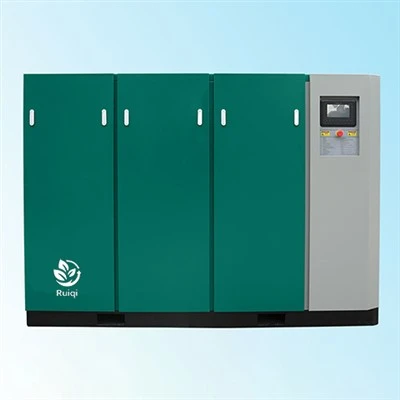
If you want more technical details to verify this, here are a few trusted sources we reference all the time: Gardner Denver’s official compressor system integration guides, the Compressed Air and Gas Handbook, and recommendations from the Energy Star program for compressed air efficiency.
Air Compressor That’s all for now—hit us up if you have questions, we’re here to help.
Suzhou Ruiqi Intelligent Equipment Co., Ltd.
As one of the most professional gardner denver air compressor manufacturers and suppliers in China, we also support custom service. As we have world-leading production equipment and strong manufacturing capabilities, we warmly welcome you to buy high quality gardner denver air compressor made in China here from our factory. Contact us for pricelist.
Address: No. 1729, Zhongshan South Road, Wujiang District, Suzhou City, Jiangsu Province, China, 16th Floor
E-mail: wts476626494@126.com
WebSite: https://www.ruiqicomp.com/
