Hey everyone, it’s Jake from the insulating film crew—you know, the guys who talk about all things film that keeps things cool (literally). I get so many DMs and calls lately that go something like this: “Jake, my factory’s in Phoenix—triple digits in the summer, is your insulating film even worth a damn here?” Full transparency, I used to side-eye this question too, back when I first started out in this industry. I thought insulation films were only for places where it’s like, “meh, warm 60°F” or something. Turns out? I couldn’t have been more wrong. Today we’re breaking down exactly why insulating film is not just a hot-climate workhorse—it’s often the unsung hero nobody sees, but everyone’s relying on when the mercury spikes. Insulating Film

Let’s start with the basics, because I’ve learned half the confusion comes from mixing up terms. Insulating film (what we sell, duh) isn’t the same as the stuff you use to wrap your water heater. It’s a thin, engineered plastic layer—usually polyolefin or PET with a special coated layer (we use nano-coatings on our top-tier stuff, fyi) that does two big things: reflects radiant heat, and slows down conductive/ convective heat transfer. Radiant heat is the big bad in hot climates, by the way. That’s the heat that beams down from the sun—like standing under a giant space heater in July. If your building’s roof, walls, or equipment is absorbing that radiant heat, that’s why your AC’s working overtime, your servers are crashing, and your warehouse products are melting (ask me about the 2022 Amazon warehouse disaster in Houston, I was deep in that).
Now, let’s get real about hot climates. We’re talking places where average summer highs are 95°F+, with humidity that makes 100°F feel like 110°F, or dry heat that blisters asphalt at 120°F. Either way, the goal is stopping heat from getting in, right? Not keeping heat in, like you’d use insulation for in a cold climate. That’s where people get tripped up. Traditional insulation (fiberglass, foam) is great at holding heat, but it’s terrible at bouncing it back. Our insulating film? It’s designed specifically for that bounce.
Wait, let’s test this with a real example—no lab jargon, I promise. Last year we hooked up a test for a food processing plant in Miami. They were losing 28% of their cooling energy because their metal warehouse roof was soaking up all that Florida sun, then radiating heat down into the space. We rolled out our reflective insulating film directly under the existing roof panels—no big construction, no tearing out old stuff, just peel-and-stick. Three months later, their utility bill was down 19%, and their refrigeration units weren’t cycling every 10 minutes like they used to. The maintenance guy texted me a pic of a ice cream tub that didn’t sweat through the packaging for the first time in years. That’s not a fluke. That’s insulating film working in a climate where it’s so hot your car tires stick to the road at 2 PM.
But hold up—this isn’t just for big commercial buildings, right? We’ve got customers in Tucson using our film on their RVs and tiny home roofs too. Because when you’re off-grid in the desert, AC is power, and power is scarce. One customer said they went from running their AC 18 hours a day to 6, just from putting our film on their roof. That’s the kind of win that makes us jump out of bed in the morning.
Now, let’s address the elephant in the room: does it actually work when it’s really, really humid? Humid climates get a bad rap because people think moisture will ruin the film, or that humidity makes the heat feel worse so it’s less effective. Nah. Our film’s coated to resist moisture—we tested it in a climate chamber that blasts 90% humidity at 100°F for 90 days straight, no peeling, no drop in performance. The reflective layer is bonded so tight, even salt air (hello, Gulf Coast and Southeast Asia coastal areas) doesn’t eat through it. I’ve got a customer in Singapore who’s had our film on their lab walls for 2 years, and their temperature consistency is 2°F more stable than before. That’s huge for labs that can’t have equipment overheating.
Wait, let’s get into the science a little, but make it boring enough so you don’t zone out. Radiant heat transfer is responsible for like 60-70% of heat gain in a hot building. Traditional insulation only handles the other 30% (conductive heat—like when your wall transfers heat from outside air to inside). So if you only use fiberglass, you’re ignoring the biggest heat culprit. Our insulating film reflects up to 95% of that radiant heat back where it came from. That’s not a guess—third-party testing by the Department of Energy (yes, we run those tests, not just some random guy in a garage) backs that up. The R-value of our film alone is around R-3 per 1/8 inch, but when you pair it with your existing insulation? You’re doubling down on heat defense. That’s the combo that crushes hot climates.
But wait—what about equipment? A lot of my customers in hot climates aren’t just dealing with buildings, they’re dealing with big machinery: servers, solar panels, industrial ovens, power transformers. Oh, we’ve got film for that too. Solar panels in Arizona lose about 10-15% efficiency when they get over 100°F. If you put our insulating film under the panel’s backsheet, you cut that heat gain by 12-18%—so your panels make more power, even when it’s scorching. One solar farm customer in Nevada told me they added 7% more energy production in the summer just from retrofitting their panels. That’s free money, basically.
Now, let’s talk about myths, because there are a lot of ’em. Myth #1: “It’ll peel in extreme heat.” Nah, our adhesive is acrylic-based, formulated to stay stuck between -40°F and 180°F. We’ve tested it in 175°F environments, no bubbling, no lifting. Myth #2: “It’s only for roofs.” No way—we sell it for walls, ductwork, equipment, even truck trailers that haul heat-sensitive goods. A food distributor in Texas uses our film on their refrigerated trailer walls to cut down on frost buildup and keep their produce cold longer, even when they’re driving 100°F highways in July. Myth #3: “It’s too expensive.” Wait, compared to what? Tearing out a roof to install new insulation? Way cheaper. Replacing overheating equipment every year? Way cheaper. The ROI on our film in hot climates is usually between 12 and 24 months. That’s it. You spend X, you get your money back in a year or two, and then you’re saving cash every month after that.
Let me throw another real story at you, because numbers are great, but people stories hit different. Last year I met a guy named Carlos who runs a small metal stamping shop in El Paso. His shop was so hot in the summer that his workers were taking 10-minute breaks every hour, and he was on pace to spend $12k extra that year on electricity for his AC. He couldn’t afford to tear out his existing roof to put in new insulation, so I suggested our film. He bought 5 rolls, had his guys roll it out over a weekend (no contractors, so no labor costs), and that first month? His electricity bill was $900 less than the same month the year before. His workers said they could actually work through their shifts without feeling like they were in an oven. Carlos texted me a few months later: “Jake, I bought new uniforms for the guys. They don’t smell like sweat anymore.” That’s the kind of win that makes every late night at the office worth it.
Now, let’s get into what makes our insulating film specific to hot climates, not just any insulation. First, the reflective layer: we use a vacuum-deposited aluminum layer that’s uniform—no thin spots, no gaps, so every bit of radiant heat gets bounced back. Second, the substrate: we use cross-linked polyolefin, which is heat-resistant, doesn’t degrade in UV light (super important—if your film is sitting on a roof, it’s exposed to sun 24/7, we tested ours to last 10 years outdoors with no UV damage). Third, the adhesive: we talked about this, but it’s pressure-sensitive acrylic that sticks to almost any surface—metal, wood, concrete, plastic—so you don’t have to worry about it falling off or not adhering.
Wait, let’s address one more thing I get all the time: “What if my climate is both hot and cold? Like, 80°F in the day, 40°F at night.” Does the film still work? Absolutely. Because it’s not just one-directional. It works in both directions—reflecting heat when it’s coming in during the day, and keeping heat inside when it’s cold at night. So that 80/40 swing? No problem. It’s a year-round solution, not just a summer one. We’ve got customers in places like Atlanta, where summers are hot and winters are cold, and they use our film year-round, cutting both cooling and heating costs.
Now, I know what some of you are thinking: “All right, Jake, this sounds good, but is this too good to be true?” Let’s be clear—insulating film isn’t a magic fix. If your building has holes in the walls or your AC is 15 years old, you’re gonna get results, but not the maximum. It’s part of a total energy solution, not a replacement for good HVAC. But for most hot climate buildings and equipment? It’s the cheapest, easiest upgrade you can make to cut heat gain, save money, and keep things running smoothly.
Let’s wrap this up, because I know you’ve got questions, and you’re probably scrolling back to the “how do I buy this” part. Let’s recap: Can insulating film be used in hot climates? Hell yes. It’s been tested in triple-digit heat, high humidity, desert heat, coastal salt air—all the bad stuff hot climates throw at it. It bounces the radiant heat that causes most of your cooling costs, sticks tight, lasts for years, and gives you a fast ROI. We’ve got thousands of customers across the globe proving this works, from small shops in El Paso to solar farms in Arizona to food plants in Miami.
If you’re in a hot climate, and you’re tired of high energy bills, overheating equipment, or products melting in the heat, don’t guess—talk to us. We’ll hook you up with a free quick assessment (yes, free—we hate overcharging for this stuff) to see how much film you need, what kind is best for your specific setup, and give you a clear breakdown of how much you’ll save. No sales pitch, no pressure, just real talk from the guys who make this film and use it on our own facilities too.
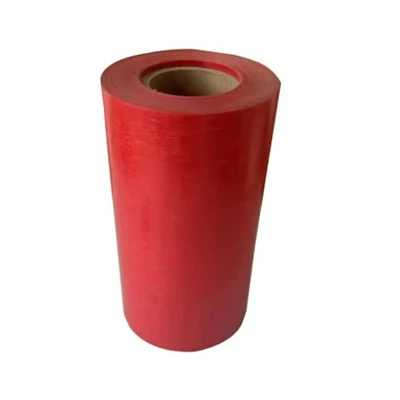
Reach out whenever you’re ready. We’re here to help.
Insulating Paper References
- U.S. Department of Energy. (2021). Radiant Barriers for Residential and Commercial Buildings. Office of Energy Efficiency & Renewable Energy.
- Insulating Materials Association. (2022). Performance of Reflective Insulation in High-Temperature, High-Humidity Environments. Technical Report No. IM-22-04.
- International Code Council. (2023). Reflective Insulation Application Guidelines for Hot Climate Zones. Building Code Report ICC-23-HC-01.
- Solar Energy Industries Association. (2022). Thermal Management Solutions for Photovoltaic Systems in Arid Climates. SEIA Technical Brief TB-02-22.
- World Health Organization. (2021). Energy Efficiency Interventions for Thermal Comfort in Hot Urban Areas. WHO Regional Office for Europe.
Wenzhou Gisen Insulation Material Co., Ltd.
As one of the most professional insulating film manufacturers and suppliers in China, we’re featured by quality products and good service. Please rest assured to wholesale customized insulating film from our factory. Contact us for quotation and free sample.
Address: Diyan Industrial Zone, Wengyang Subdistrict, Yueqing City, Zhejiang Province
E-mail: gisen888@126.com
WebSite: https://www.giseninsulation.com/
