Hey folks, if you’ve ever shopped for metal parts that need to hold up to daily use—think hardware for doors, components for small electronics, or even parts for outdoor gear—you’ve probably stumbled on zinc die casting. And as someone who’s been in the zinc die castings game for over a decade, I’m here to break down why cold chamber zinc die casting is such a game-changer for so many of our clients, from small startups to big-name manufacturers. Let’s cut through the jargon and get real about what makes this process work so well, especially compared to other casting methods. Zinc Die Castings
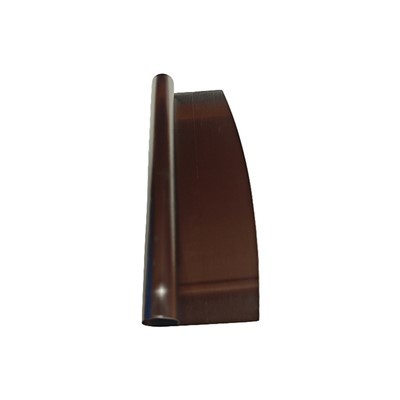
First off, let’s get one thing straight: cold chamber vs. hot chamber. If you’re new to this, you might be wondering what the difference is, and why it matters for zinc. Hot chamber casting is usually for low-melting-point metals like aluminum or zinc, right? Wait, yeah, zinc’s melting point is pretty low—around 787°F (419°C)—so some folks go the hot route. But over here at our shop, we swear by cold chamber for most of our zinc jobs, and that’s not just because we’ve refined the process. Let’s start with the big one: accuracy. When you’re making parts that need to fit perfectly—say, a gear for a wireless speaker or a latch for a toolbox—you can’t afford tiny inconsistencies. Cold chamber die casting uses high-pressure injection to force molten zinc into steel dies, and that pressure (we’re talking thousands of PSI) means the metal gets into every nook and cranny of the mold. The result? Parts with super tight tolerances, often within 0.005 inches or even less. Hot chamber can work for zinc, but because the machine’s submerged in molten metal, you’re more likely to get impurities from the chamber walls that throw off precision. We’ve had clients come to us after hot chamber parts kept failing quality checks, and switching to cold chamber fixed their entire production line’s accuracy issues. That’s the kind of win that sticks.
Next up, strength—specifically, consistent, reliable strength. A lot of people think zinc is just a lightweight, soft metal, but when it’s cast using cold chamber methods, it’s way tougher than you’d guess. Why? Because cold chamber injection lets us control the cooling rate of the zinc way better than hot chamber. Hot chamber cools faster at the surface, leading to a porous core—like a sponge inside your part. That porousness means parts can crack under stress, especially if they’re used outdoors or in high-demand settings. Cold chamber, on the other hand, solidifies the metal more evenly, so the whole part has uniform density. We’ve had a client who makes bike cargo racks tell us their old parts from a local caster kept breaking after 6 months of use, but since switching to our cold chamber zinc castings, they’ve had zero breakage in over two years. That kind of durability is non-negotiable for industries like automotive, aerospace, and construction, where parts can’t fail mid-use.
Wait, let’s talk about versatility too. Cold chamber zinc die casting isn’t just for simple parts—we can make super complex, intricate designs that would be impossible with other methods. Because the high pressure pushes the molten zinc into every tiny detail of the die, we can do things like fine threads, small holes, and even decorative engravings without extra machining. Let’s say a client needs a custom connector for a smart home device that has 12 tiny pins and a smooth, branded surface. With cold chamber zinc casting, we can cast all of that in one step, instead of machining each pin separately. That cuts down on production time and costs big time. Plus, zinc is naturally corrosion-resistant, which means the parts we make don’t need a ton of extra coating—though we do offer options like powder coating or plating for extra protection, if clients want it. That’s a huge plus for outdoor parts, like handrail fittings or garden tool components, that get exposed to rain, humidity, and temperature swings.
Cost, let’s be real, is always a factor. I get it—every business is watching their bottom line. Here’s the thing about cold chamber zinc die casting: even though the initial tooling cost is a bit higher than, say, sand casting, the long-term savings are insane. Because we get such high precision and low scrap rates (we’re talking less than 2% scrap on most jobs, compared to up to 10% for hot chamber), you don’t waste material on parts that don’t meet specs. And since we can make parts with minimal post-processing—no need to machine down rough edges or fix porosity—you save on labor costs too. For example, a client in the electronics space was using machined aluminum parts for their camera housings, costing them $2.50 per part with a 5% scrap rate. Switching to our cold chamber zinc castings brought the cost down to $1.10 per part, with a scrap rate under 1% and no extra machining. That’s the kind of saving that adds up to thousands of dollars a month, no joke.
Wait, another point that’s often overlooked: consistency across runs. If you’re a manufacturer making 10,000 parts a month, you don’t want the first run to be slightly different from the 10,000th. Cold chamber die casting uses standardized, closed-loop systems that control everything from the molten metal temperature to the injection speed to the cooling time. Every part comes out the same—same dimensions, same strength, same finish. We’ve had clients who supply major retail brands, where every part has to be identical to meet quality standards, and they tell us our cold chamber castings are the only ones that let them keep their customers happy. Hot chamber, because it can have temperature fluctuations and impurities, often has more variation between runs, leading to rejections and delays.
Oh, and let’s not forget about sustainability—something a lot of our clients care about these days. Zinc is 100% recyclable, right? And the scrap from cold chamber casting is clean, because we don’t have the contaminants that come with hot chamber’s submerged machines. We melt down our scrap and reuse it in new casts, so we send almost nothing to landfills. Plus, the low scrap rate means we use way less material overall, which cuts down on the environmental impact of production. A lot of our eco-conscious clients love that they can get high-quality parts without leaving a huge carbon footprint.
Now, I know some of you might be thinking, “Wait, why not just use plastic injection molding for these parts?” Let’s be honest—plastic is cheap, but it’s not nearly as strong or durable as zinc. If your part is going to be used in a load-bearing application, plastic will crack or warp over time. And if you need a part that can handle high temperatures, zinc is way more heat-resistant than most plastics. For example, a client who makes heating system components tried plastic first, but it melted after a few months of use. Swapping to cold chamber zinc castings fixed that problem immediately.
At the end of the day, all these advantages add up to one thing: parts that work better, cost less, and are easier to produce consistently. We’ve worked with all kinds of clients—from startup teams making their first prototype to large corporations with global supply chains—and cold chamber zinc die casting has solved more problems for them than any other method we’ve tried.

If you’re curious about how cold chamber zinc die casting could work for your project, we’re here to help. Whether you need a custom prototype, a small batch of parts, or a full production run, we can walk you through every step—from design and die making to casting and finishing. No pushy sales stuff, just real talk about what will work best for your needs. We’ve got the experience, the equipment, and the team to deliver parts that meet your specs and your budget. So if you’re ready to stop dealing with parts that break, cost too much, or vary run to run, reach out and let’s chat about your next project.
Deep Drawn Parts References
- American Foundry Society. (2021). Die Casting Fundamentals: Cold Chamber vs. Hot Chamber Processes. Foundry Management & Technology.
- Zinc Die Casting Association. (2022). Performance Characteristics of Cold Chamber Zinc Die Cast Components. ZDA Technical Bulletin Series.
- NIST. (2020). Tolerance Control in High-Pressure Die Casting for Precision Manufacturing. National Institute of Standards and Technology.
- European Die Casting Association. (2023). Sustainability in Metal Casting: Zinc Recyclability and Process Efficiency. EDCA Sustainable Manufacturing Report.
Yuyao Aozhou Metal Products Co., Ltd.
We are one of the most experienced zinc die castings manufacturers and suppliers in China. With a professional production team, we are able to meet the needs of the majority of our customers. Please rest assured to buy customized zinc die castings made in China here from our factory.
Address: No.6, Nanbailonggang, Wuma Industrial Zone, Lubu Town, Yuyao City
E-mail: xqr-2316@163.com
WebSite: https://www.cnaozhou.com/
