As a long – standing supplier of alkylphenol intermediates, I’ve witnessed firsthand the ever – changing dynamics in the chemical industry. One of the most crucial factors that significantly impacts the production of alkylphenol intermediates is the reaction temperature. In this blog post, I will delve into the influence of reaction temperature on the yield and quality of these vital chemical compounds. Alkylphenol Intermediates
1. Understanding Alkylphenol Intermediates
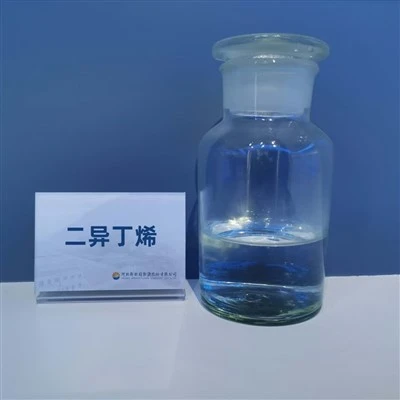
Alkylphenol intermediates are a class of organic compounds with wide – ranging applications. They are commonly used in the production of surfactants, antioxidants, and polymers. The structure of alkylphenols consists of a phenol ring with one or more alkyl groups attached. The properties and reactivity of these intermediates make them highly valuable in various industrial processes.
2. Influence of Reaction Temperature on Yield
2.1 Reaction Kinetics
The reaction temperature plays a fundamental role in determining the rate of chemical reactions. According to the Arrhenius equation, (k = A\mathrm{e}^{-E_{\mathrm{a}}/RT}), where (k) is the rate constant, (A) is the pre – exponential factor, (E_{\mathrm{a}}) is the activation energy, (R) is the gas constant, and (T) is the absolute temperature. As the temperature increases, the rate constant (k) also increases. In the synthesis of alkylphenol intermediates, a higher reaction temperature can accelerate the reaction between the phenol and the alkylating agent.
For example, in the alkylation of phenol with an olefin, which is a common method for producing alkylphenols, increasing the temperature can reduce the reaction time required to reach a certain conversion rate. This results in a higher yield of alkylphenol intermediates within a specific period. However, it is a delicate balance. If the temperature is too high, side reactions may occur, leading to the formation of unwanted by – products and reducing the overall yield of the desired alkylphenol.
2.2 Equilibrium Considerations
Many reactions involved in the synthesis of alkylphenol intermediates are reversible. The principle of Le Chatelier’s principle states that for an exothermic reaction, increasing the temperature will shift the equilibrium towards the reactants, while for an endothermic reaction, increasing the temperature will shift the equilibrium towards the products. In the case of alkylation reactions, which are often exothermic, a very high temperature may cause the reaction equilibrium to shift unfavorably, reducing the yield of alkylphenol. On the other hand, a very low temperature may slow down the reaction so much that the equilibrium is reached very slowly, also resulting in a low yield.
3. Influence of Reaction Temperature on Quality
3.1 Selectivity
The reaction temperature greatly affects the selectivity of the reaction. Selectivity refers to the ability of the reaction to produce the desired alkylphenol intermediate rather than unwanted by – products. At lower temperatures, the reaction may be more selective because the activation energy required for the formation of the desired product may be lower compared to that of the side products.
For instance, in the alkylation of phenol, if the temperature is well – controlled, it is possible to direct the reaction to form the mono – alkylated phenol rather than the di – or poly – alkylated products. High temperatures often increase the mobility of reactant molecules, leading to more random collisions and a higher probability of side reactions. As a result, the quality of the product may be compromised, with a greater proportion of impurity – containing by – products.
3.2 Physical Properties
The reaction temperature can also impact the physical properties of the alkylphenol intermediates. For example, the melting point, boiling point, and viscosity of the product can be affected by the reaction conditions. If the temperature is not properly regulated during synthesis, the resulting alkylphenol may have inconsistent physical properties, which can be a significant issue for downstream applications. In the production of surfactants, for example, the physical properties of the alkylphenol intermediate play a crucial role in determining the performance of the final product.
4. Optimal Temperature Ranges in Industrial Production
In industrial settings, finding the optimal temperature range for the production of alkylphenol intermediates is of utmost importance. Different types of alkylphenol intermediates may require different temperature conditions.
For simple alkylphenols, such as nonylphenol, the reaction is typically carried out at a temperature range of 100 – 150 °C. This temperature range allows for a reasonable reaction rate while maintaining good selectivity. At this temperature, the alkylation reaction proceeds smoothly, and the formation of side products is minimized.
For more complex alkylphenols with longer alkyl chains or multiple substituents, the reaction may require a slightly higher temperature, usually in the range of 150 – 200 °C. However, strict temperature control is necessary to ensure that the quality of the product is maintained. Advanced temperature control systems are often employed in industrial reactors to precisely regulate the reaction temperature.
5. Case Studies
Let’s take a look at a few case studies to further illustrate the impact of reaction temperature on the yield and quality of alkylphenol intermediates.
In a small – scale laboratory experiment, a research team was synthesizing octylphenol. They conducted the reaction at three different temperature levels: 80 °C, 120 °C, and 160 °C. At 80 °C, the reaction rate was extremely slow, and after 24 hours, the yield of octylphenol was only 30%. The product was relatively pure, but the low yield made it economically unviable. At 120 °C, the reaction reached a yield of 70% within 6 hours. The product had a high degree of purity, and the selectivity towards the desired octylphenol was excellent. At 160 °C, the reaction was completed within 2 hours, but the yield dropped to 50% due to the formation of significant amounts of side products, mainly di – octylphenol and other oligomers.
In an industrial production plant, a company producing dodecylphenol experienced quality issues with their product. After careful investigation, it was found that the temperature control system in one of the reactors was malfunctioning, causing the reaction temperature to fluctuate between 180 – 220 °C instead of the optimal 150 – 170 °C. As a result, the product had inconsistent melting points and a higher content of impurities. Once the temperature control system was repaired, the quality of the dodecylphenol product improved significantly, and the yield also increased.
6. Conclusion
In conclusion, the reaction temperature has a profound influence on both the yield and quality of alkylphenol intermediates. As a supplier, we understand the significance of precise temperature control in the production process. By carefully managing the reaction temperature, we can ensure high yields of pure and high – quality alkylphenol intermediates.
Olefin Raw Materials If you are in search of reliable and high – quality alkylphenol intermediates for your industrial applications, we are here to meet your needs. Our experienced team and advanced production facilities allow us to maintain strict temperature control in the reaction process, ensuring that you receive the best products possible. We invite you to engage with us for procurement discussions. Contact our sales team to learn more about our product portfolio and how we can support your business requirements.
References
- Smith, J. K. (2005). Chemical Reaction Kinetics. Wiley.
- Atkins, P. W., & de Paula, J. (2014). Physical Chemistry. Oxford University Press.
- Otera, J. (ed.). (2003). Acid Catalysis in Modern Organic Synthesis. Wiley – VCH.
Hebei Xinxinyuan Energy Co., Ltd.
Hebei Xinxinyuan Energy Co., Ltd. is one of the most professional alkylphenol intermediates manufacturers and suppliers in China, featured by quality products and good price. Please rest assured to wholesale customized alkylphenol intermediates made in China here from our factory.
Address: Zhongjie Industrial Park, Huanghua City, Cangzhou City, Hebei Province, China
E-mail: atl2066@qq.com
WebSite: https://www.xinxinyuanfr.com/
