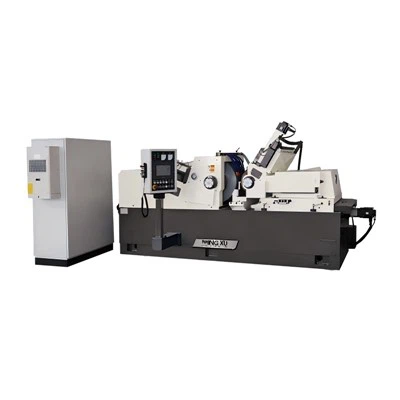
Hey there! As a supplier of automatic surface grinders, I often get asked if our machines can be used for grinding thin-walled workpieces. It’s a great question, and one that I’m more than happy to dive into. Automatic Surface Grinder
First off, let’s talk about what thin-walled workpieces are. These are parts that have a relatively small wall thickness compared to their overall size. They can be made from a variety of materials, like metals, plastics, and ceramics. Examples of thin-walled workpieces include things like aerospace components, medical devices, and electronic parts.
Now, the big question: Can an automatic surface grinder handle these delicate pieces? The short answer is yes, but there are some important factors to consider.
Advantages of Using an Automatic Surface Grinder for Thin – Walled Workpieces
One of the main advantages is precision. Automatic surface grinders are designed to provide extremely accurate and consistent grinding results. They use advanced control systems that can precisely control the grinding wheel’s movement, speed, and pressure. This means that you can achieve the exact surface finish and dimensional accuracy you need for your thin – walled workpieces.
For instance, if you’re working on a thin – walled metal part for a high – end electronic device, you need to ensure that the surface is smooth and flat within very tight tolerances. An automatic surface grinder can help you meet those requirements with ease.
Another advantage is efficiency. These machines can operate continuously with minimal human intervention. Once you’ve set up the grinding parameters, the grinder will keep working until the job is done. This is especially useful when you have a large number of thin – walled workpieces to grind. You can save a lot of time and labor costs compared to manual grinding methods.
Challenges and How to Overcome Them
However, grinding thin – walled workpieces also comes with its fair share of challenges. One of the biggest issues is the risk of deformation. Because these workpieces are thin, they are more prone to warping or bending under the pressure of the grinding wheel.
To overcome this, we’ve developed several strategies. First, we use a low – pressure grinding technique. By reducing the pressure applied by the grinding wheel, we can minimize the risk of deformation. Our automatic surface grinders are equipped with sensors that can detect the pressure and adjust it in real – time.
Another approach is to use a special coolant. The coolant not only helps to reduce the heat generated during grinding but also provides a cushioning effect. This helps to protect the thin – walled workpiece from damage.
We also pay close attention to the choice of grinding wheel. Different materials and grinding wheel specifications are suitable for different types of thin – walled workpieces. For example, for soft materials like plastics, we might use a softer grinding wheel to prevent excessive material removal.
Case Studies
Let me share a couple of real – world examples to illustrate how our automatic surface grinders have been used for grinding thin – walled workpieces.
One of our customers was a medical device manufacturer. They needed to grind thin – walled titanium components for a new surgical instrument. The components had very strict surface finish and dimensional requirements. Using our automatic surface grinder, we were able to achieve the desired results. The low – pressure grinding technique and the right choice of grinding wheel ensured that the components were not deformed during the grinding process.
Another customer was in the aerospace industry. They were working on thin – walled aluminum parts for an aircraft. Our grinder’s precision and efficiency helped them to meet their production deadlines while maintaining high – quality standards.
Tips for Using an Automatic Surface Grinder with Thin – Walled Workpieces
If you’re planning to use an automatic surface grinder for thin – walled workpieces, here are some tips:
- Proper Fixturing: Make sure the workpiece is securely held in place. Use fixtures that can distribute the clamping force evenly to prevent deformation.
- Optimal Grinding Parameters: Adjust the grinding wheel speed, feed rate, and depth of cut according to the material and thickness of the workpiece.
- Regular Maintenance: Keep your grinder in good condition. Regularly check the grinding wheel, coolant system, and other components to ensure optimal performance.
Conclusion
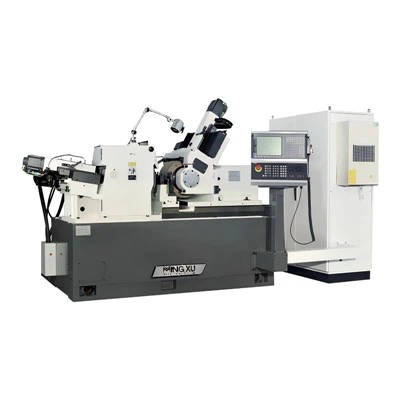
In conclusion, an automatic surface grinder can definitely be used for grinding thin – walled workpieces. With the right techniques and strategies, you can achieve high – quality results while minimizing the risk of deformation.
Surface Grinding Machine If you’re in the market for an automatic surface grinder for your thin – walled workpiece grinding needs, I’d love to have a chat with you. We can discuss your specific requirements and see how our machines can best fit your production process. Don’t hesitate to reach out and start a conversation about your procurement needs.
References
- "Grinding Technology: Theory and Applications of Machining with Abrasives" by Stephen Malkin
- "Manufacturing Engineering and Technology" by Serope Kalpakjian and Steven Schmid
Wuxi Mingxu Machinery Equipment Co., Ltd.
As one of the most professional automatic surface grinder manufacturers and suppliers in China, we’re featured by quality products and good price. Please rest assured to buy the best automatic surface grinder for sale here from our factory. Also, custom service is available.
Address: No. 5-5 Jinke Wealth Plaza, Changjiang North Road, Xinwu District, Wuxi City, Jiangsu Province
E-mail: yingyingmxjd@163.com
WebSite: https://www.mingxu-china.com/
