Hey there, fellow farmers and tractor enthusiasts! I’m part of a farm tractor supplier crew, and today we’re diving deep into a question that often comes up: What’s the relationship between engine size and tractor power? Farm Tractor
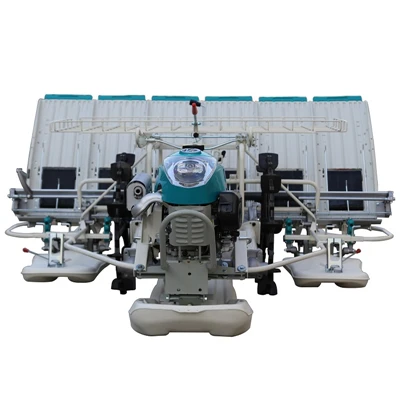
Let’s start with the basics. When we talk about engine size, we usually refer to the engine’s displacement. This is the total volume of all the cylinders in the engine. It’s typically measured in liters or cubic inches. For example, you might hear about a tractor with a 4 – liter engine or a 250 – cubic – inch engine.
Now, power is like the muscle of the tractor. It determines how much work the tractor can do. Power in tractors is commonly measured in horsepower (hp). So, the big question is, does a bigger engine size always mean more power?
Well, in general, there’s a positive correlation between engine size and power. A larger – displacement engine has more space for air and fuel to mix and burn. When this mixture ignites, it creates a force that moves the pistons, and this force is what ultimately powers the tractor. So, if you have a tractor with a 6 – liter engine compared to one with a 3 – liter engine, all other things being equal, the 6 – liter engine has the potential to produce more power.
But here’s the thing, "all other things" are rarely equal. There are a bunch of other factors that can affect a tractor’s power output. One of the most important ones is the engine’s design. Modern engines are getting really smart. They use things like turbochargers and superchargers. These are like little power boosters. A turbocharger uses the exhaust gases to spin a turbine, which then forces more air into the engine. This allows more fuel to be burned, increasing the power output. So, you could have a smaller – displacement engine with a turbocharger that produces as much or even more power than a larger, naturally – aspirated engine.
Another factor is the engine’s efficiency. Some engines are just designed to be more efficient at converting the energy in the fuel into mechanical power. An efficient engine can get more work done with the same amount of fuel, which means it can have a relatively small engine size but still pack a punch in terms of power.
Let’s take a look at some real – world examples. In our inventory, we have a few different models of tractors. There’s a mid – sized tractor with a 3.5 – liter engine. This engine is turbocharged and has a really efficient design. It can produce around 100 hp. On the other hand, we have an older, larger tractor with a 5 – liter engine. But because it’s an older design and doesn’t have any forced – induction systems, it only puts out about 90 hp.
Now, why does all this matter to you, the farmer? Well, if you’re in the market for a new tractor, understanding the relationship between engine size and power can help you make a smarter choice. If you have a small farm with light – to – medium – duty tasks like mowing, tilling small plots, and moving light loads, you might not need a huge engine. A smaller, more efficient engine can do the job just fine and save you money on fuel.
But if you’re running a large – scale farm with heavy – duty tasks like plowing large fields, pulling heavy implements, or hauling big loads, you’ll probably want more power. You might think that means you need the biggest engine possible, but that’s not always true. You need to look at the overall design of the tractor and the engine. A well – designed, turbocharged smaller engine could be a better option than a large, inefficient one.
It’s also important to consider the long – term costs. A larger engine usually means more fuel consumption. And if the engine is not efficient, you’ll be spending more money at the pump over the life of the tractor. Maintenance costs can also be higher for larger engines. There are more parts to maintain and potentially replace.
So, how do you figure out what’s the best tractor for your needs? First, make a list of the tasks you’ll be doing with the tractor. How heavy are the loads? How large are the fields? Once you have a clear idea of your requirements, you can start looking at different tractor models. Pay attention not just to the engine size but also to the power output, the type of engine (naturally – aspirated or turbocharged), and the efficiency ratings.
At our farm tractor supply business, we’ve got a wide range of tractors to suit different needs. Whether you’re looking for a compact tractor for a small hobby farm or a heavy – duty machine for a large commercial operation, we can help you find the right one. Our team of experts is always on hand to answer your questions and give you advice based on your specific situation.
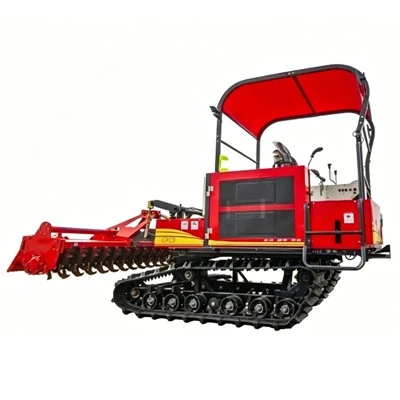
If you’re interested in learning more about our tractors or want to discuss which one might be the best fit for your farm, don’t hesitate to reach out. We’re here to make the process of buying a tractor as easy and stress – free as possible. Let’s get you the tractor that will help you get the most out of your farm.
Rice Combine Harvester References
- Smith, J. (2018). Tractor Engine Technology. Farming Today Press.
- Brown, A. (2020). Understanding Tractor Power. Agricultural Insights Publications.
Huzhou Liangyi Agro Machinery Co., Ltd.
As one of the most professional farm tractor manufacturers and suppliers in China, we have world-leading production equipment and strong manufacturing capabilities. Please rest assured to wholesale advanced farm tractor from our factory. Contact us for more cheap products.
Address: High-Tech Industrial Zone, Huzhou City, Zhejiang Province, China
E-mail: Liangyi_agro@126.Com
WebSite: https://www.cnliangyi-agro.com/
