Hey there! I’m a supplier of terrain models, and I often get asked about how we create a terrain model for a specific region. Well, I’m here to break it down for you in a way that’s easy to understand. Terrain Model
Step 1: Gathering Data
The first thing we need to do is gather data about the specific region. This is like the foundation of our terrain model. There are a few ways we can get this data.
One of the most common methods is using satellite imagery. Satellites can take high – resolution pictures of the Earth’s surface. These images give us a great overview of the region, showing things like the shape of the land, the location of rivers, lakes, and forests. We can use software to analyze these images and extract important information such as elevation data.
Another way is through LiDAR (Light Detection and Ranging). LiDAR works by sending out laser pulses and measuring the time it takes for them to bounce back. This allows us to create a detailed 3D map of the terrain. It’s super accurate and can capture even the smallest features like small hills or depressions.
We also collect data from on – site surveys. Our team goes to the region and uses tools like GPS (Global Positioning System) to measure the exact location and elevation of different points. This ground – truth data is really important to make sure our model is as accurate as possible.
Step 2: Data Processing
Once we have all the data, it’s time to process it. This is where the magic happens! We use specialized software to clean up the data. Sometimes, the data we collect might have errors or noise, so we need to get rid of that.
We also convert the raw data into a format that we can use to create the terrain model. For example, we might convert the elevation data into a digital elevation model (DEM). A DEM is a 3D representation of the terrain’s surface, where each point on the model has an elevation value.
After that, we start to analyze the data to identify different features of the terrain. We can use the data to figure out where the mountains are, where the valleys are, and how steep the slopes are. This analysis helps us to understand the region better and make our model more realistic.
Step 3: Designing the Model
Now that we have our processed data, it’s time to start designing the terrain model. We use 3D modeling software to create a virtual model of the region. This software allows us to manipulate the data and create a detailed and accurate representation of the terrain.
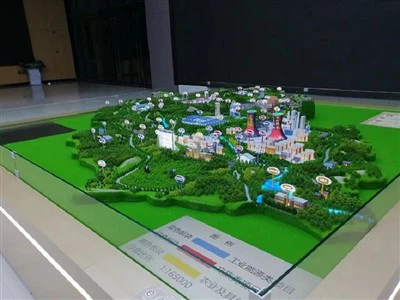
We can add different textures to the model to make it look more realistic. For example, we can add a grass texture to the areas where there are fields, and a rocky texture to the mountains. We can also add water effects to represent rivers and lakes.
We pay a lot of attention to the scale of the model. We need to make sure that the size and proportions of the model are correct. This is important because it helps us to accurately represent the real – world features of the region.
Step 4: Printing or Fabricating the Model
Once we’re happy with the virtual design, it’s time to turn it into a physical model. There are a few ways we can do this.
One popular method is 3D printing. 3D printers can create the terrain model layer by layer, using materials like plastic or resin. This allows us to create very detailed and accurate models.
Another option is to use traditional fabrication methods. We can use materials like wood, foam, or plaster to build the model. This method is more hands – on and can be a good choice for larger models or when we need to add more custom elements.
Step 5: Finishing Touches
After the model is printed or fabricated, we add the finishing touches. This includes painting the model to make it look more realistic. We use different colors to represent different features of the terrain, like green for vegetation, blue for water, and brown for soil.
We also add labels and markers to the model. These can be used to identify different locations, such as cities, landmarks, or geographical features. This makes the model more useful for educational or planning purposes.
Why Our Terrain Models Are Great
Our terrain models are not just accurate; they’re also very useful. They can be used in a variety of fields. For example, in urban planning, city planners can use our models to visualize how a new development will fit into the existing terrain. In geology, scientists can use our models to study the structure of the Earth’s surface.

We also offer custom – made models. If you have specific requirements for a terrain model, like a particular scale or level of detail, we can work with you to create a model that meets your needs.
Contact Us for Your Terrain Model Needs
Digital Sand Table If you’re interested in getting a terrain model for your specific region, don’t hesitate to reach out. Whether you’re a researcher, a planner, or just someone who wants a cool model of a place, we can help. We’ll work with you every step of the way to make sure you get the perfect terrain model. So, drop us a line and let’s start creating your terrain model today!
References
- Jensen, J. R. (2007). Remote Sensing of the Environment: An Earth Resource Perspective. Prentice Hall.
- Maune, D. F. (2007). Digital Elevation Model Technologies and Applications: The DEM Users Manual. American Society for Photogrammetry and Remote Sensing.
- Lillesand, T. M., Kiefer, R. W., & Chipman, J. W. (2014). Remote Sensing and Image Interpretation. Wiley.
Guangzhou Zonco Culture and Media Co., Ltd.
Guangzhou Zonco Culture and Media Co., Ltd. is one of the most reliable terrain model manufacturers and suppliers in China, also supports customized service with low price. We warmly welcome you to wholesale cheap terrain model from our factory. For quotation, contact us now.
Address: Room C371, 402, Building 6, No. 3 Xintang Street, Tianhe District, Guangzhou
E-mail: 13123180052@163.com
WebSite: https://www.scalemodellab.com/
